Showing posts with label customers. Show all posts

Wednesday, 20 November 2013

Business Websites – Do you want a Business Website? Do you need a Business Website? What you want your Business Website to do? What is a Business Website for?

  • Ever thought websites are not for you or your business?

  • You may think its only large online retailers or big companies who need one?

  • Maybe you think that you have to be clever on a computer to have one?

  • You may think ‘what the heck do I need a website for, as I advertise elsewhere?’


Whatever you think and whatever else you are doing to promote your business, if you don’t have an online presence, then you are not ever going to reach the full marketing potential of your business.

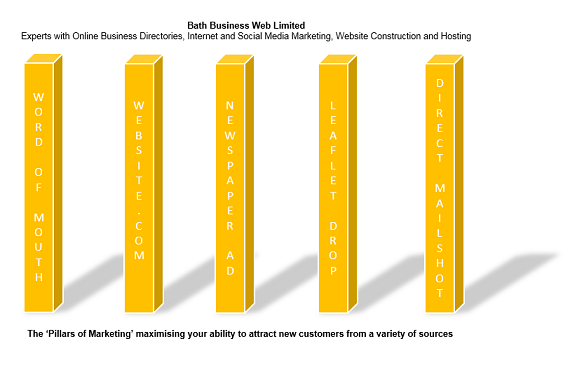
You know as well as I do, no business leaves marketing and advertising to chance. I bet you also know that no smart business owner keeps to one method of marketing. Like me you understand the need for what we call in the marketing world, the ‘pillars of marketing’ approach.

These pillars are made up of a variety of ways to market and advertise your business. All the top successful companies do this. They leave nothing to chance and maximise all opportunities. As they know that if they don't they are limiting their chance to maximise their on-going potential to attract new customers. 

Consider this. Did Woolworths know that after a hundred years of trading it would disappear from the high street overnight? Did Habitat realise, that after growing so successfully and with a loyal customer base, it would have to close up its high street outlets and move into a small convenient corner of Homebase? Did we expect some of the big banks to crash and leave customers stranded? The answer to all these is no.


Regardless of their ability to market or advertise their business, when push came to shove these giants of the business world were vulnerable. As all businesses are.

And that's why if you have decided that your continual flow of self referrals, word of mouth recommendations or responses from that one and only paper directory you advertise in is all your going to do, think again. 

Don't take your business or your personal future for granted. You may well have had a nice steady flow of customers conning to you on the back of your current advertising. But whose to say how it will be next month, next year or in the years to come. One day you could be another business which succumbs to the unknown consumer market which will be with us as we proceed toward 2014 and beyond.

Businesses close down for a number of reasons. The main reason is cash flow. That cash flow needs consumers. Consumers need to know you are there. They then need to be made aware that what you have on offer matches what they need. They then need reassurance that you can deliver on what you say you can offer.

So if you want to ensure you attract the people who are going to supply you with the money to keep that cash flow ticking over, you will need to take a serious look at your marketing strategy. And if you haven't yet got a good number of different ways to market your business, then get cracking and get some ideas of what you can do.
business websites, bath business web, online marketing, online advertising, social media
Because by having these different pillars of marketing in place. These different ways to advertise and promote your business. You are much more likely to maximise your chance to hook in new customers. Because potential customers don’t just read one newspaper. They don’t just respond to  a direct letter or flyer.

Out there in that big wide world of potential customers are people like yourself. People who respond to different things, in different ways, at different times. Some of these potential customers will hear about you from a previous customer. That’s great because people will then trust in you and if it fits with what they need, they will more likely contact you than anyone else.
 
But what about those potential customers who don’t hear about you ‘word of mouth’, how will they hear about you? Well maybe they won’t. Maybe they will see you. See your van or an advert in the local paper. Happen to come across an article in a magazine.
 
Then there are those potential customers who know what they want and will go searching for it. We all are the same in this way and this is sure the way we shop for things the most. After all, word of mouth and just coming across an advert are marketing approaches that are kind of left to chance. It would only be by chance that whoever your customers talk to are looking for your particular service or product at that very given moment. And of course they may well keep hold of your contact details until such time they do need your service.
 
So if you agree with me that most people, most of the time, will have an idea in mind of what they need. Whether they need new shoes, new windows, a new hair style, new central heating, an extension to the house or a back massage to relieve stress. Generally people do know what they need at any given time and therefore most people will go searching for the people who can supply them with what they need. Makes perfect and logical sense to me. Therefore, the next bit is easy. Where do they look for the people who will supply them with what they need?
 
You may be a new business or an established business with or without a website. It is quite surprising how many businesses do not have any web presence whatsoever. One would imagine with the dramatic and swift rise of the Internet and the ever growing use of mobile phones and with the expansion of tablets that those businesses without a website would have caught on by now. I wonder what it will take for the penny to drop. 
 
I can imagine that there are types of business who may not think that a website is going to do them much good. A business that has established a good flow of customers who return or word of mouth referrals. I could see certain retail pout lets and shops thinking that their presence on the high street is all the advertising they need.
 
No doubt that certain trades such as hairdressers, beauty salons, osteopaths, beauticians etc. may wonder how or why their customers would go searching on the Internet when they have adverts in local newspapers or magazines. Do scaffolders, roofers or bricklayers see a benefit to a website when they spend all their time outside in all weathers and are as far from the webisphere as you can get.
 
Well what can I say? Plenty really as Mrs Bingham will verify. It all boils down to how can a website benefit your business. And what do you want your website to do for your business. Do you want it to advertise the fact you are there? Do you want it to act as a brochure or online shop? Do you want it to be informative regarding the services you offer and the experience and qualifications you have to do the work? Do you want it to show off the projects which you have already completed or show examples of recent work? Well a website can do any one of these things or all of these things for you and your business.

Maybe you already have an idea of what you want and not sure how to go about it. So how about giving the professionals a call who can take you through step by step what you can do and how it can help.
 
business websites, bath business web, online marketing, online advertising, social media


Call for a free consultation and find out more about how you can help your business grow
 
01225 920 503


Wishing you and your business every success for a future unknown.

Bingham
Blogger for Bath Business Web Ltd
Your local Internet Marketing Specialist, Business Directory and Website Design Company

Friday, 19 July 2013

A Brief History of Business Websites on the Internet

The modern day Internet (or the "World Wide Web”) has transformed the way we live. To get this in perspective, I would like to take you on a short journey in time:

1989 - Computer scientist, Sir Tim Berners-Lee (who you may have seen on the opening ceremony of the London 20-12 Olympics), presented a paper containing a method by which scientists could share essential documents.

1990 - Early adopters of the World Wide Web were mainly university-based scientific departments.

1991- Saw the world’s first website. Hoorah!

I wonder if you recall when you first saw the Internet. Where were you?  What do you remember? How did you view it? Just a fad maybe, something that wouldn’t catch on? And just how long ago was that? In historic terms, it was just very recently. Yet so much has progressed in terms of the technology and how we use or interact with that technology.

1993 - The first publicly accessible, fairly basic, web browser named 'Mosaic'.

1994 - The first search engine 'Archie', again very basic compared with what we have today. Followed swiftly by more familiar web browsers such as Yahoo and Internet Explorer.

1996 - It became obvious to most publicly traded companies that a Web presence was no longer an option. The increase of two-way communication over the Web led to the possibility of direct Web-based commerce (e-commerce).

1998 - Saw an increase in new web based companies, as well as the birth of what would become the most popular of all search engines - Google. 

2001 - The Web bubble burst. Many new start-ups went out of business. However, many also survived and went on to do very well. Some Companies which began as online retailers became highly profitable.

2002 - In the aftermath of the ‘dot com bubble’ these Companies success helped enhance the way we used the Internet with the likes of Google, EBay or Amazon.  This new era gave rise to social networking sites such as MySpace, Facebook and Twitter. Networking sites for Professionals, Entrepreneurs and Business also appeared such as LinkedIn, Biznik, PROskore.
 
These sites meant business was now able to communicate with thousands, if not millions of people and this would open up the biggest market place the world has ever known.

As business owners we need to keep up with this rapidly changing medium of marketing, communication and trade interchange.
  • E-mobile technology (mobiles & tablets) is developing rapidly
  • People are becoming co-dependent on this technology
  • The technology is more portable, practical and affordable
  • Twitter & other social media websites are growing
  • The pre-web (older) generation is keen to adopt this technology
  • Popularity of videos, images or photos is increasing … rapidly
  • So too websites such as You Tube, Flickr, Photobucket
  • Websites use images, photos, film & video to enhance the virtual experience
The future of the Net is looking golden.

Technology already allows us to send voice commands to mobiles and computers. Soon we’ll be able to have conversations with them. A mobile phone already developed by Cambridge University, in which a virtual assistant, human looking in every way, interacts with the user. Bit like talking to a personal advisor or personal shopper, who in the future could be advertising your business or products.

There will always be a need for larger viewing platforms for work, design or play However, the use of mobiles is on the increase. We now use them for the things that were previously done on computers and laptops. This market is growing .... fast.
 
Social media on the increase (especially for business). Where we used to text, we now tweet. Consumers are talking to each other on mass. Through social media people now want to know how a Business or Company interacts with its community. They want to see the human side of businesses.

People are now associating reliable businesses with the Internet, with research indicating that businesses with a website have grown 46% faster than those without.
 
What is the real value of the Internet to your business?

It can generate and help develop new business opportunities, reduce your expenses and improve business operations.

If you compare other more traditional ways to market or advertise your business. The cost of a one page advert in a local magazine for example. For one edition, reaching 8-10 thousand people, £500 - £600. The average cost to build a 4 page website, there 24/7, for however many years you want it, reaching an audience of millions, £500 - £600. You do the maths.

Will having a website provide customer awareness of my products and services; offer ready information and support; expand my markets; increase my income?  Absolutely.

A website is an adverting and marketing tool for your business. Potential customers will either be looking for you by name; seen your website in an advert or on a vehicle; looking for the services you provide; or just happen to come across you, in their search for other sites.

Websites extend business hours 24-7, any updated information, offers or product promotion is seen immediately. It’s an excellent means of generating new sales & keeping present customers aware of new products or services. It’s a brochure and catalogue all in one. A good website links to social media sites, video sites, professional bodies or associations. And with Pay Pal and the like one can offer safe and secure online transactions. With unlimited space you can convey your message for unlimited time. Your market is increased. New ideas can be tested in real time with instant results.

There is good practical value in having a website:

Statistics on who visits your site helps determine where you spend your money.

There are various ways to achieve increased visibility on the Internet. The main method is Search Engine Optimisation (SEO) as well as Local Maps Optimisation listings.

Your website advertises your business, products and services. The best brochure; the best billboard and the best commercial, seen by millions. Creating links to other sites such as local directories, Google maps and a strong position on search engines, makes your business stand out from the crowd.

Remember! If you want to ensure you spend you money wisely and get the right product offering the best results always go to a 'professional' Web Design Company. The most successful sites on the Internet are ........ the most visible ones.

Intelligent advertising and connecting with the wider public (through networking sites), will create an awareness and an approachability that people will want to explore. Analysing feedback from Google or potential customers, means you’re able to update and develop your business effectively, efficiently, economically and productively. Offering yourself opportunities for growth and financial reward … profit both in income and personal and professional satisfaction.

Bingham
Blogger for Bath Business Web Ltd

Monday, 15 July 2013

Making a Good Impression in Business

Shop owner, architect, web designer, hypnotherapist, plumber  or one of hundreds of businesses throughout Bath & the South West - you need to promote the right impression for your business.
 
The impression you set for your business, your offices, vehicle, how you advertise, talk or how you dress, really does matter.


Where does that impression start?

Your attitude to business is the starting point. Setting the right first impression is where it starts. Keeping that positive, professional impression of you and your business has to be maintained.

What you need to consider.

It doesn't actually matter what kind of business you own. It doesn't matter if your business is working at home, from a computer, digging a garden, selling from a retail outlet, driving a lorry or deliveries in a van. Whatever your trade, setting the right impression matters.

It matters because others will judge you, whether you like it or not. People will judge you and your business on how you present yourself. How you present yourself over the phone or face to face. Potential customers will notice if your van is clean or dirty, if the work clothes you wear are smart, how tidy and organised your shop is or the cleanliness of your office.

People notice these things and will make very swift judgements as to whether they think your business fits with their expectations of your trade or industry.

Now for those Eddie Stobart fans out there, of which there seem to be many. This iconic business started delivering fertilizer and the like, way back in the 1940’s. They still deliver smelly loads and an array of consumables and retail products today. Their founder decided way back then, that there was a need to make the right impression.

So what makes Stobart stand out from other haulage contractors?

Well Stobart are very successful at keeping to the agreed time for their deliveries and doing so with due care and attention for the products they carry. Their drivers are courteous and polite and trained to a high standard. Their lorries stand out from the crowd and are recognised instantly. Their vehicles are well maintained and kept clean inside and out. The pride the staff have for the business shows itself in bucket loads, or should I say lorry loads.

Where to make an impression?


Well it all starts with you. How you present yourself, whether face to face or over the phone is the start. You also need to be thinking positively about your customers. After all, without them you have no business.

So it’s vitally important that you think well of customers, want to do the best job you can for them and give them the right impression of you and your business.

Consider what you would expect from someone in your trade, if they were there to offer you a service. How you would want to be treated? How would you expect them to speak to you? How will they present in what they wear, or what vehicle they use? 
The right impression makes you credible

Use the same thinking to decide how to organise and maintain your offices, shop or vehicle. If your office is messy and in disarray, the customer may well think that applies to the way you do business.

If you arrive in a tatty old van with a poorly sign-written business name, then they may wonder if they have Del Boys dodgy dealership, rather than a reputable business person.

Consider the job at hand. Have you estimated it at the right price or given a realistic time frame to get the job done?

Are you considering that this customer will tell people about you when you have done a good job? Because whether they do or don’t, if you get it wrong they definitely will tell people about it. Bad news travels a lot quicker and louder than good news.


Do you want customers to be pleased with your efforts and for you to be proud of your achievements? Because if you do and you can make it happen, then that impression will stick and each and every time you impress a customer with all these things you will surely see the positive results. 
 
Always have in mind the impression you want to share in all you do.

Ensure your business advertises the right impression. Make sure your website is up to date. Make sure it promotes your business in the best light and it is professionally built and correctly coded for search engine optimisation. Ensure it is compatible with mobiles, tablets and computers.  If you advertise in magazines, on billboards or posters have your adverts are professional and send the right message. Whatever you do, however you do it, always bear in mind the impression your business is making to the world around you.

Bingham

Blogger for Bath Business Web Ltd


Sunday, 23 June 2013

"What makes a good Sales Person?"

Lively and enthusiastic people sell
Confident people sell
Happy people sell   
Even cheeky people sell

A good product sells. But does a good product sell itself?


When you look at it, selling has more to do with the interaction of people than anything else.

How many times have you been into a shop and come across a sour faced, unenthused, even slightly rude shop assistant, not bothered to buy anything and vowed never to return.
 

What about the product? Do you have faith in your product?


Is there something about your product that you think is flawed or won't hold up to the scrutiny of the customer? Whatever you think about your product and regardless of any thoughts you may have, you need to first have confidence and certainty of your ability to sell. After all most sales people sell on behalf of someone else who has designed or developed the product. So your enthusiasm for selling something you may never want or own yourself has to be established in other ways.

How does the customer know it’s a good product to buy?


Well they don't. That is, unless someone they know recommends it. They have heard it’s the latest 'must have product' to own.They’ve seen it advertised. They have owned an older version of the same thing. Or the sales person makes them aware of how this product will enhance or benefit their life in some way.

So without the knowledge of what a product can or may do for a customer, they will always fall back to the sales person’s ability to make that product shine and be something they must buy, right now. Because if they don’t do it there and then, they are more likely to leave it and never give it a go. Which is why sales people sometimes come across as a bit pushy. Because they know that too and what they want to do is ‘close the deal’ and make that sale.
 
Always prepare yourself
When making a cold call or before speaking to a customer as they walk into your shop, remember to talk to them as if they are already a valued customer and they know you personally. Smile before you speak to them. Even if you are on the phone, especially if you’re on the phone and imagine they have been waiting for you to speak to them. A customer will know even with a phone call if you are smiling or not smiling. They can feel the difference! Remember, happy people sell.

Selling is a state of mind
This state of mind needs to say ‘I care for my customer’. If you care for your customers, then you will make them feel comfortable. So when you then ask probing questions, suggest the right products and justify those products  and handle objections confidently. Closing the deal will then be a lot easier.

Develop empathy
Put yourself in the customer's shoes and try to put forward a proposition that you yourself would like to receive. This requires focusing on your customer’s needs, not your own.

Quickly drop down barriers
Introduce yourself by name and occupation and explain what your job role involves. Then follow this up with: "My job is not to sell you anything (customer name), my job is to present you with financial solutions from which you can make an informed decision." A surprisingly simple yet a highly effective way to bring high customer resistance to a rapport building level.

Questions
The sales persons questioning should always be attempting to help the customer to understand and express what they need. This usually and naturally causes the customer to ask the seller if the solution can be provided, by the seller or their product.

Diagnose before you prescribe
Sales people should see themselves as problem solvers. To solve problems correctly they must first understand the nature of the problem they intend to solve. So if you’re selling websites, then how is it that by not having one there is a problem for the customer? Rather than,“you need a website in this day and age otherwise you’ll losing out.” Losing out how exactly?

Objection to the price
When a customer says to you, “I can't afford it.” Well maybe that’s just fair enough. After all you don't have access to their bank balance. So how about saying to them, “I am glad you said that. Some of my best customers said the same thing. Let me show you what I mean.” This enables you to get back into your sales pitch by giving examples of your happy customers following their purchase. It is a simple, effective and importantly non-confrontational way to get back into the pitch after a price objection.

Another way to deal with price objection is to ask the customer; “If we were the same price as (name another company’s product) would you buy from us?” When the customer says "yes" (which they normally do), ask why. They will then list all the USP's/benefits that sparked their interest in your product and you can explain that your price is what it is because of those benefits they just listed. For most people this convinces them of the value in your product.

Value for money
Everyone is looking for value for money. So how about offering two products together at an attractive price. This extends value to the customer and helps to reduce stocks of the slow-moving items.

Also toward the end of the sale focus on two or three options for the customer, instead of focusing purely on 'the sale'. Give the customer two options like “How about we look at option A or B for you today?” This way the customer's attention is drawn to two positive choices and not the 'whether or not to buy' aspect.

Closing the deal
When it is time to create a commitment from the customer and close that deal you can either ‘propose’ something or you can ask the customer ‘how they want to proceed’. If the customer is indecisive, use the ‘propose’ tactic. If the customer wants to take charge, ask ‘how they want to proceed’. Either way, you make it easy for the buyer to buy.

Your integrity as a sales person
Always do what you said you were going to! This will mark you out from many of your competitors from the start.

A successful sale is in your hands.
 
Bingham
Blogger for Bath Business Web Ltd